If you have any questions, you are always welcome to contact us. We'll get back to you as soon as possible, within 24 hours on weekdays.
Shipping Information
Use this text to answer questions in as much detail as possible for your customers.
Customer Support
Use this text to answer questions in as much detail as possible for your customers.
FAQs
Use this text to answer questions in as much detail as possible for your customers.
Contact Us
Use this text to answer questions in as much detail as possible for your customers.
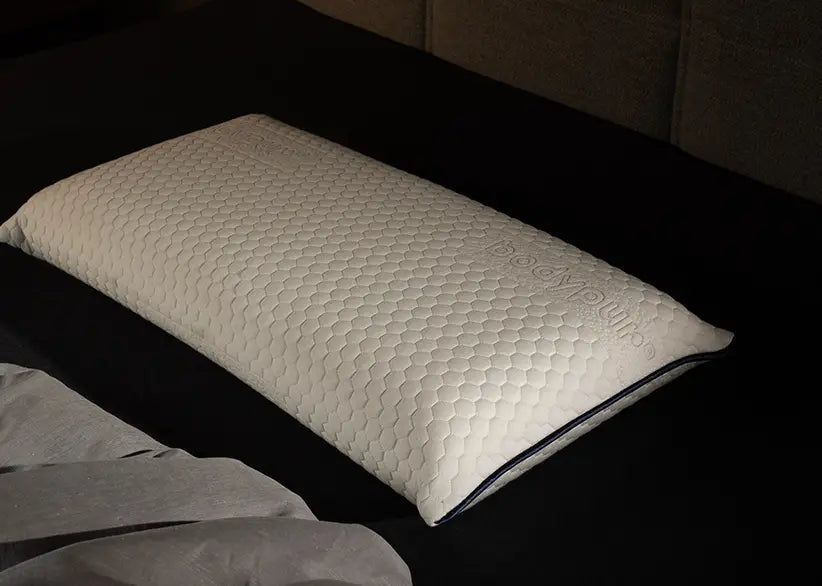
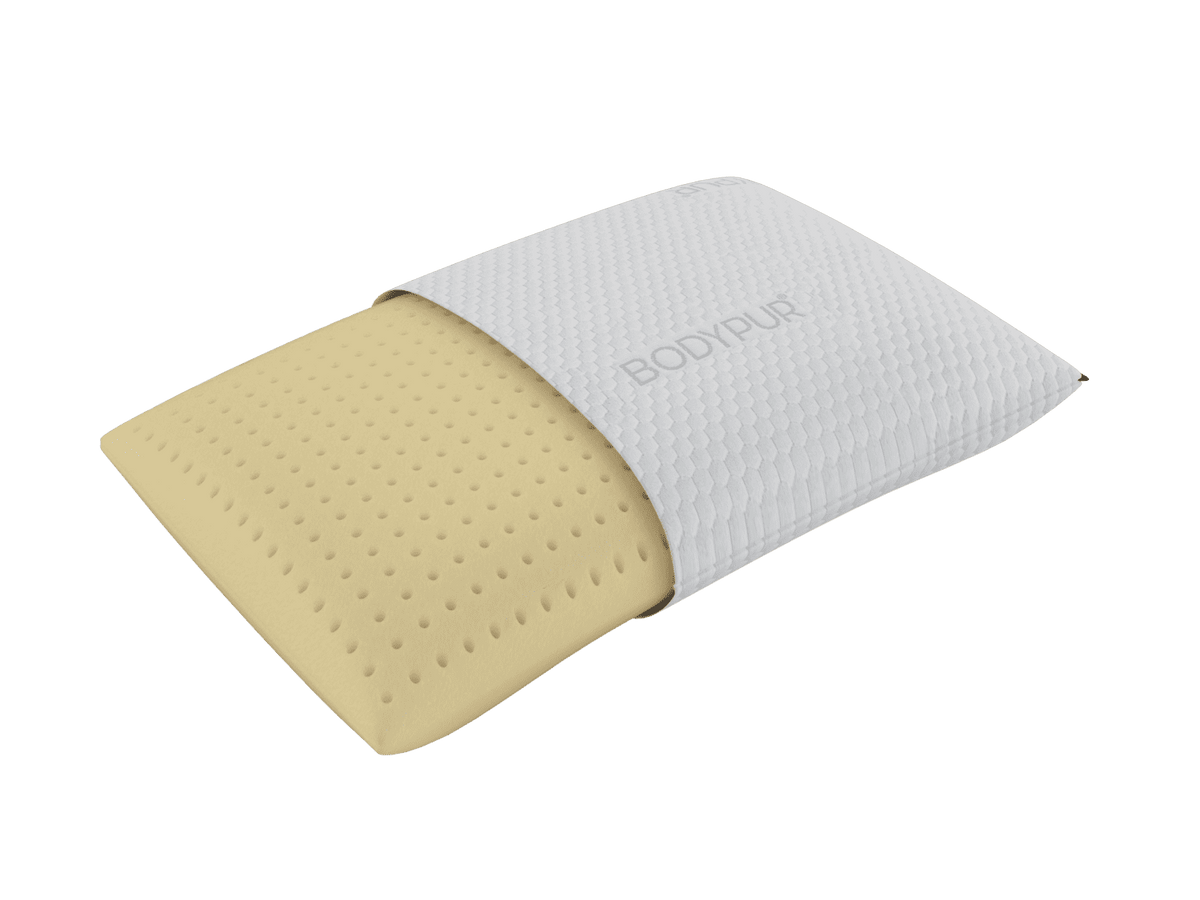
BODYPUR® Pillow Soft
Soft enough for cuddling. Firm enough for your cervical spine.
Do you toss and turn from your side to your back and back again at night? The BODYPUR® Soft adapts to every movement. Thanks to our BODYPUR® foam, it adaptably conforms to your head and neck area in all positions – with optimal stabilization of the cervical spine.
The result: a pillow that feels like cuddling but works like an ergonomic support.
Practical for on the go: The included travel bag reliably protects your pillow from external influences – you don't have to miss out on your usual comfort even when traveling.
Advantages at a glance
BODYPUR® foam adapts to every sleeping position
Optimal stabilization of the cervical spine
Soft and cuddly – ideal for side and back sleepers
Includes travel bag for on the go
The BODYPUR® foam
The Wave is also based on our in-house BODYPUR® foam – pressure-relieving and durable.
Care & Hygiene
Details regarding the material and washability can be found on the sewn-in care label.
Your sleeping position is the most important factor when choosing a pillow. Side sleepers need a high, firm pillow (approx. 12–18 cm) to fill the gap between the head and shoulder and keep the spine aligned. Back sleepers are best suited with a medium-high pillow (approx. 10–15 cm) that supports the natural curve of the neck without pushing the head too far forward. Stomach sleepers, on the other hand, need a very flat or even no pillow to avoid neck tension.
Which filling is right for me?
The choice of filling depends on personal preferences, sleeping habits, and potential allergies. Memory foam conforms to the body's shape and offers excellent pressure relief, but can retain heat. Latex is a natural, breathable alternative with good support. Down and feathers feel luxurious but often provide less stability and can be problematic for allergy sufferers. Those prone to allergies should opt for hypoallergenic materials like bamboo fibers, which naturally inhibit dust mites and bacteria.
How high should my pillow be – and what is "loft"?
"Loft" refers to the height or thickness of a pillow and is crucial for a healthy sleeping posture. A pillow that is too high pushes the head forward and strains the neck; one that is too low causes the head to tilt backward. Rule of thumb: side sleepers → high loft, back sleepers → medium loft, stomach sleepers → low loft. The mattress also plays a role – on a soft mattress, the body sinks deeper, requiring a lower pillow, while a firm mattress often demands a higher pillow.
How do I know when my pillow needs to be replaced?
A pillow that has served its purpose shows clear signs: It no longer returns to its original shape after being folded, has stains, looks flat and lumpy, or causes neck pain or headaches in the morning. A simple test is: Fold the pillow in half and let go – if it doesn't spring back, it's ready for replacement. Experts recommend replacing pillows every 1–2 years; however, high-quality latex or foam pillows can last longer.
What if I sleep poorly in the heat or have allergies?
If you sweat a lot, you should look for pillows with cooling technology – such as gel-infused, ventilated, or Tencel/bamboo-covered models that regulate body temperature. Bamboo fibers are naturally breathable and moisture-wicking, making them ideal for warm sleepers. For allergies, synthetic or bamboo fillings are often a better choice than down, as they offer dust mites less habitat. Additionally, a hypoallergenic pillowcase is recommended as a first protective layer.
Choosing a selection results in a full page refresh.